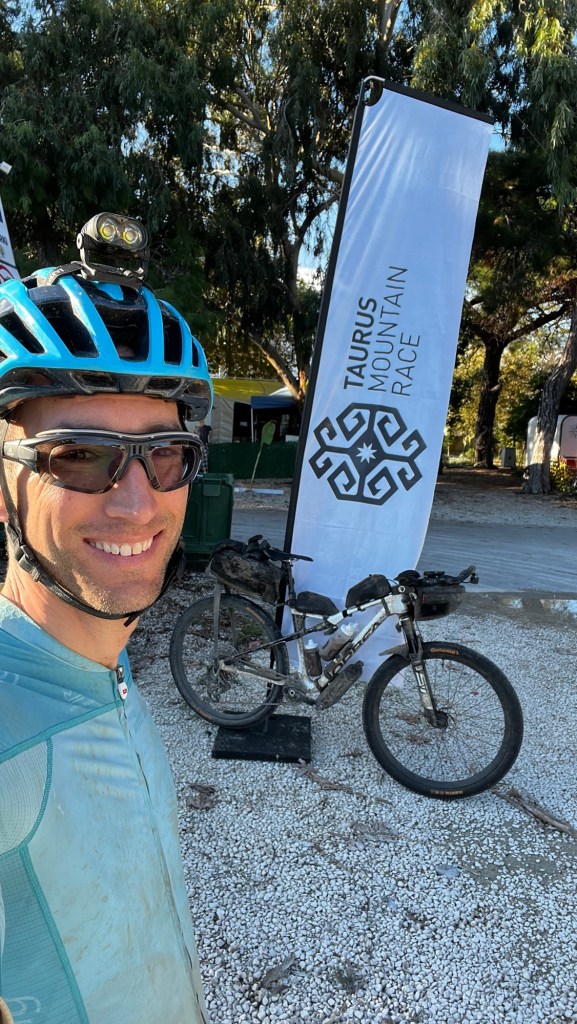
I took part in the inaugural Taurus Mountain Race in Turkey — an ultra-distance bikepacking race starting in Antalya and heading deep into the Taurus Mountains. It turned into one of the most demanding, beautiful, and ultimately humbling races I have ever started. After extreme weather in a remote high-altitude section, the organisers made the right call and cancelled the event.
A wet start in Antalya
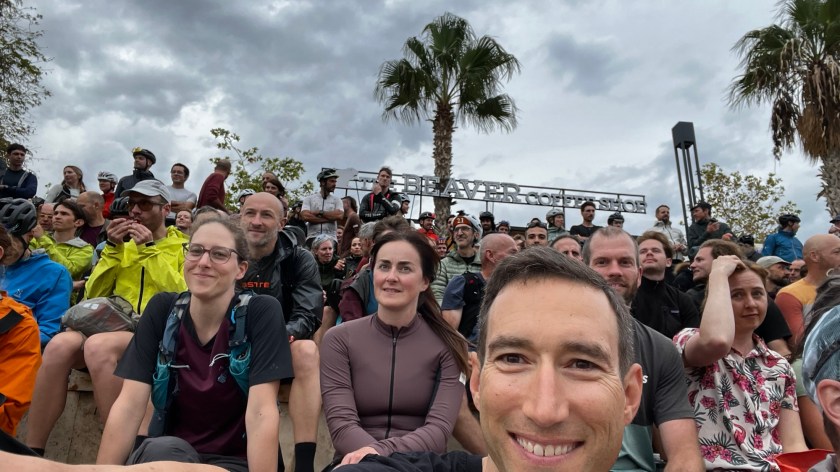
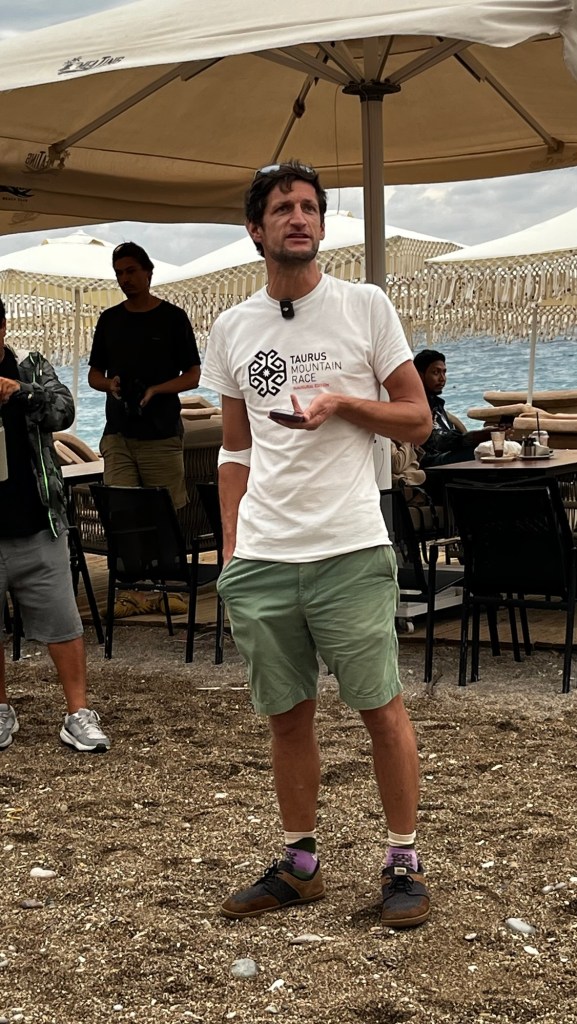
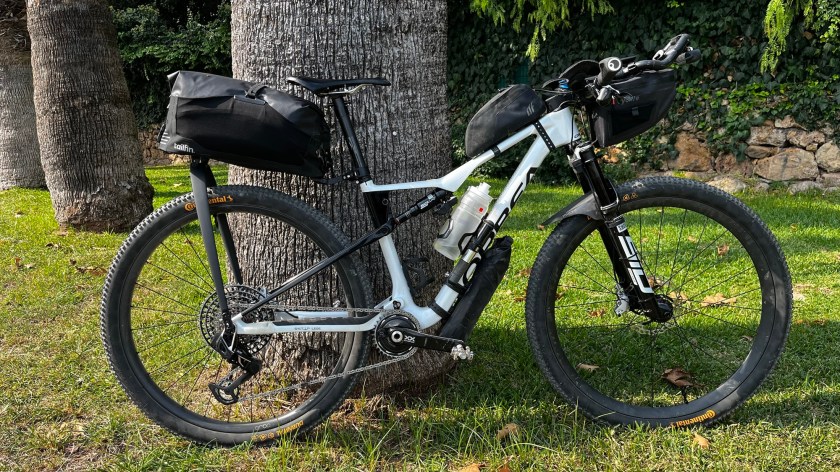
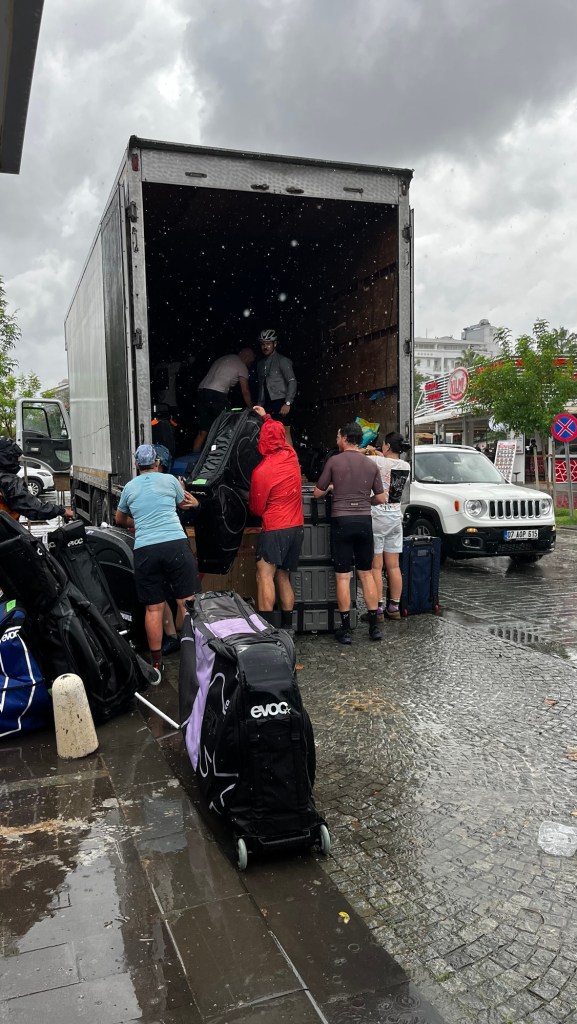
We rolled out on Wednesday morning at 9 a.m. in heavy rain. Almost every rider was wearing rain jacket and rain pants at the start — unusual for an ultra race, but entirely justified. The rain never really disappeared on the first day; it kept returning in waves.
Early on there was a tough hike-a-bike section as evening turned into night. The trail was extremely steep, slick, and barely rideable. With my relatively light build, I was at the limit just wrestling my loaded bike uphill. Despite the conditions, I reached Checkpoint 1 somewhere in the top ten.
Most of the leading riders planned to sleep there. I was not particularly tired, and I knew the checkpoint would be busy and chaotic, so I made a quick decision: refill bottles, eat something, and keep moving. When the top five stopped, I suddenly found myself leading the race.
Leading, then the peanut-butter mud
Riding at the front was motivating, but I also knew it might be temporary. Riders such as Justinas had stopped to rest and would come back fresher and faster.
During that first night I hit a long stretch of what I can only describe as peanut-butter mud. It was so thick that the tyres jammed with mud and pushing the bike became impossible. In the end, I walked backwards, dragging the bike behind me by the handlebar until I finally got through the section.
The next morning, with sunrise and drier conditions, my head cleared again. I stayed in the lead into the afternoon and even rode over a major pass before Justinas Leveika caught me, followed shortly afterwards by Benedek Borsos. By then they were first and second.
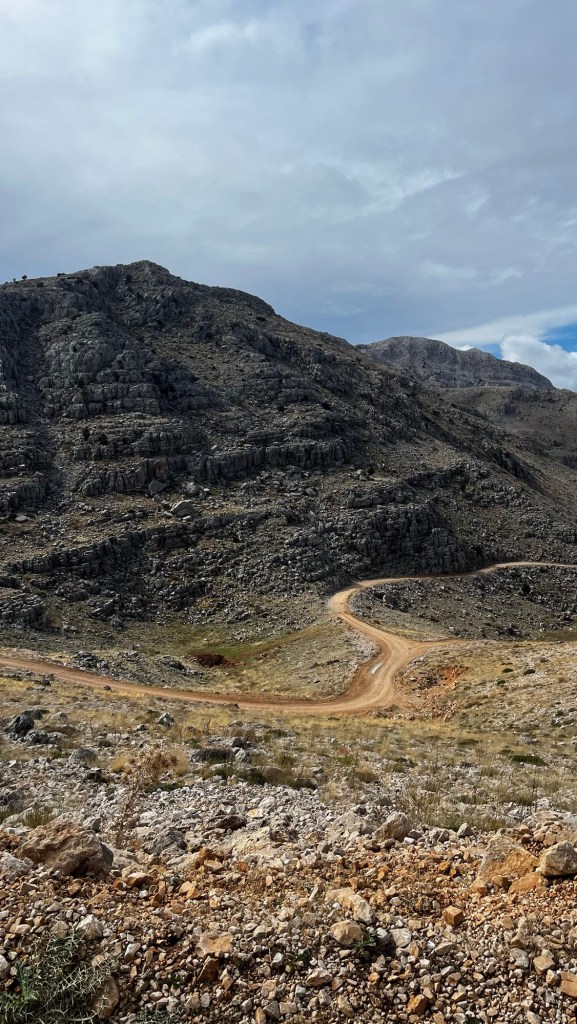
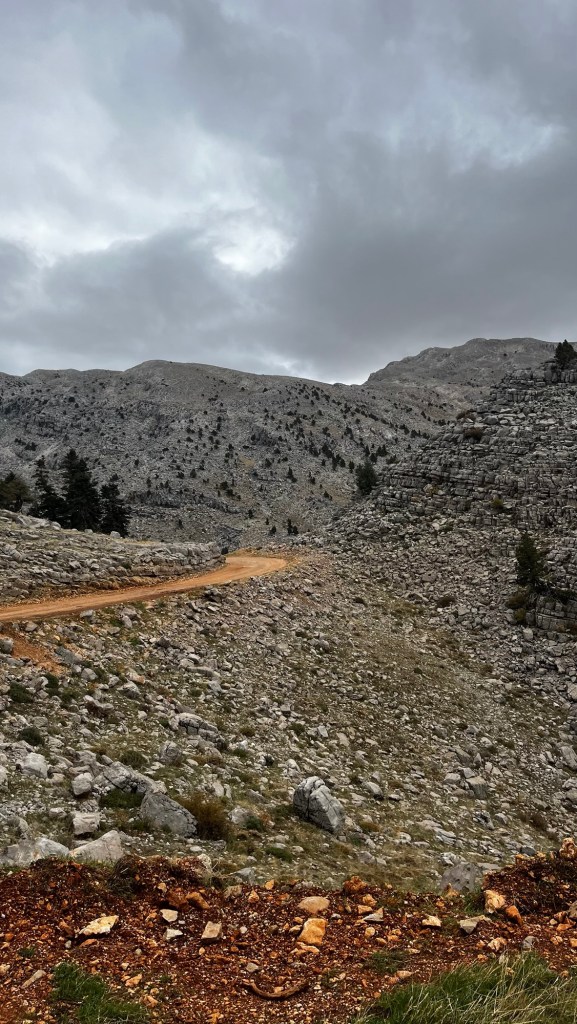
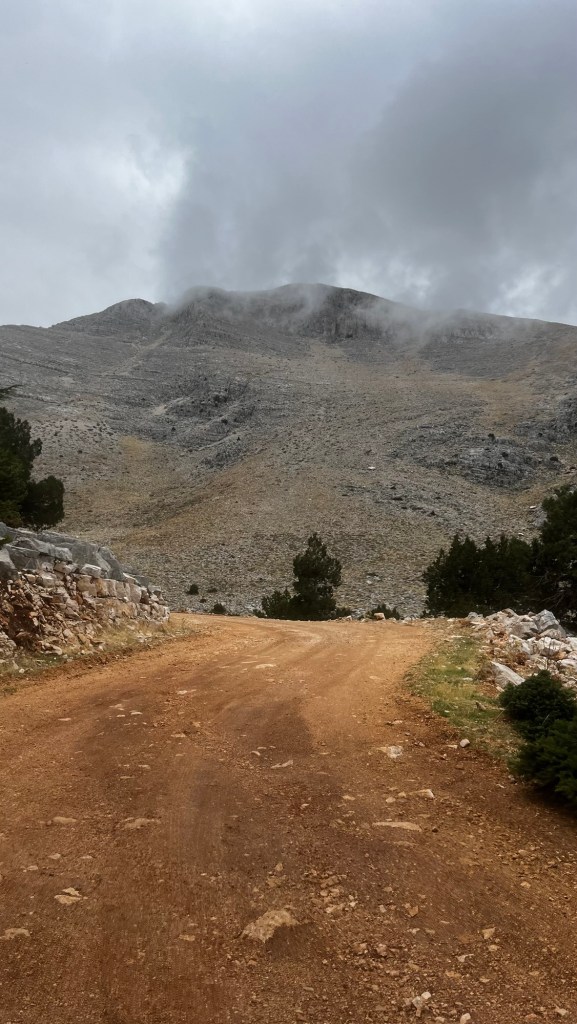
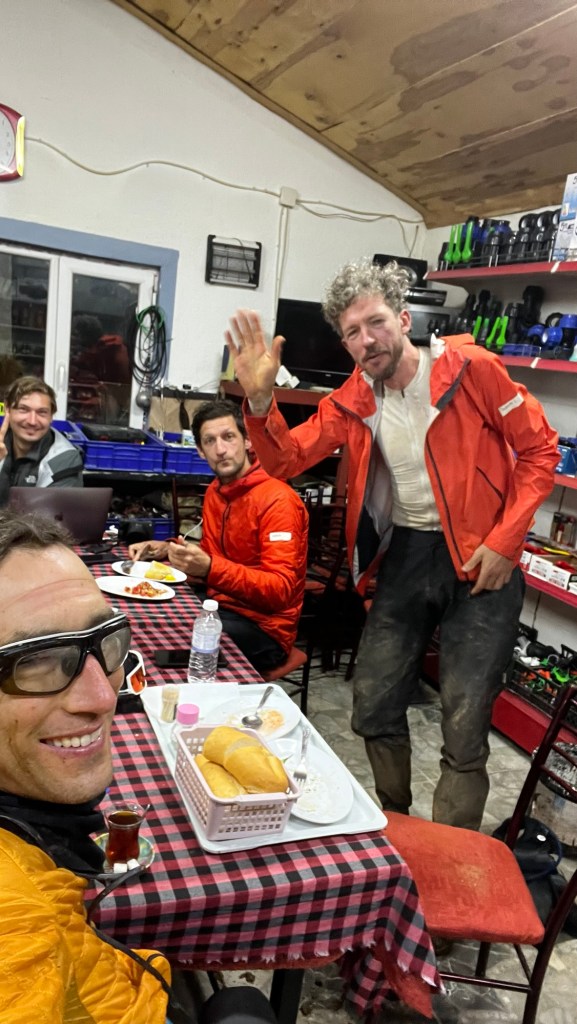
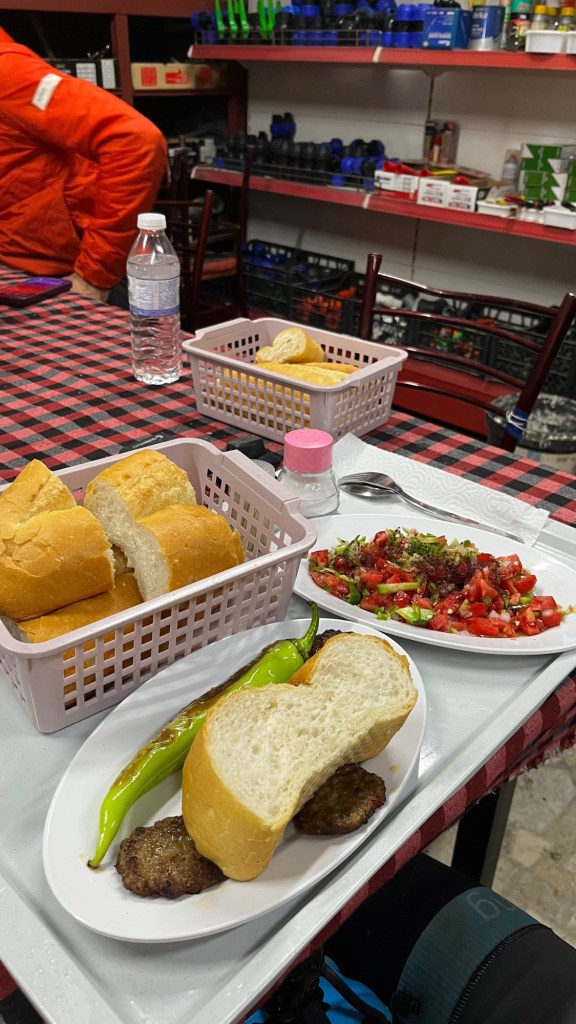
As darkness fell, another long muddy passage appeared. This time the mud was still wet enough that much of it was rideable — exhausting, but manageable. Near civilisation I found a tiny truck stop restaurant. Justinas was there eating, and Nelson was with his media crew. I ordered food too; it was the perfect launchpad for the second night.
The night that broke the rhythm
My plan had been to sleep properly that night. The route profile suggested a larger resupply town roughly 30 kilometers ahead, where I hoped to find a hotel and get a genuinely restorative sleep after riding through the first night without rest.
Then, shortly after the restaurant, the peanut-butter mud returned — and this time it seemed endless.
I tried pushing. Impossible. I tried carrying the bike. Brutal: the frame, wheels, luggage, and everything else were coated in heavy mud. I alternated between walking a few meters, pushing, carrying, and repeating. It was a complete drama.
The lowest mental moment came when Joe Nation passed me seemingly effortlessly with his bike shouldered while I was fighting for every meter. That nearly broke me. Eventually there was a river crossing, which I had been looking forward to because I hoped it would clean the bike and peanut butter mud would be over afterwards. It did not. The mud continued.
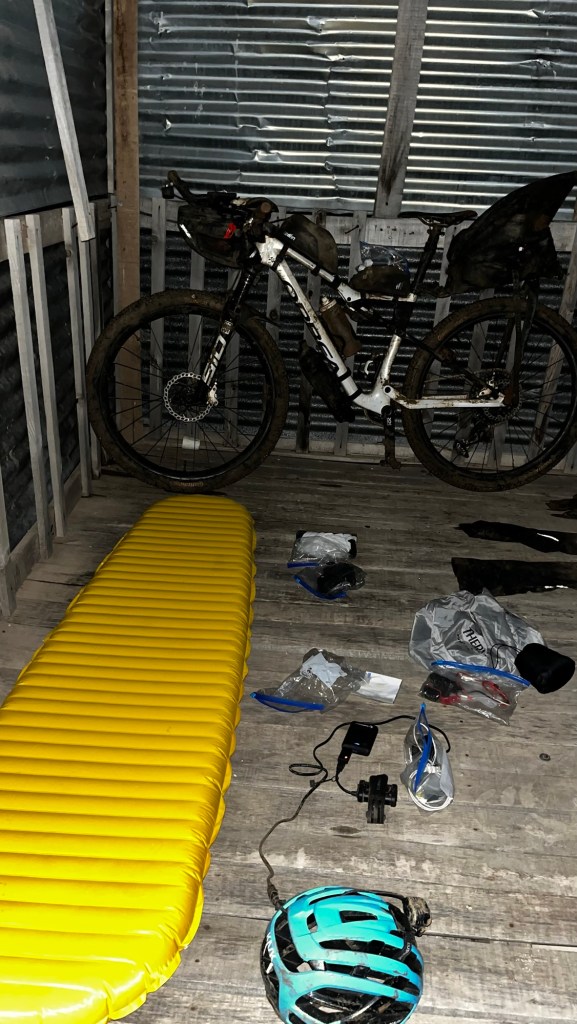
When I checked “ride with gps” and saw the next road was only about half a kilometer away, I carried the bike the whole way. Just after the tarmac began, I found a small shelter. That was where I decided to stop properly.
I set an alarm for around six hours. I was mentally finished and told myself that the placing no longer mattered — recovery came first. During that sleep I dropped from fourth to eleventh as rider after rider passed in the night.
Pac-Man mode
Waking up changed everything. I felt fresh, strong, and mentally reset. Apart from a few shorter mud sections, the day rode well, and I went into full Pac-Man mode: one rider after another came back.
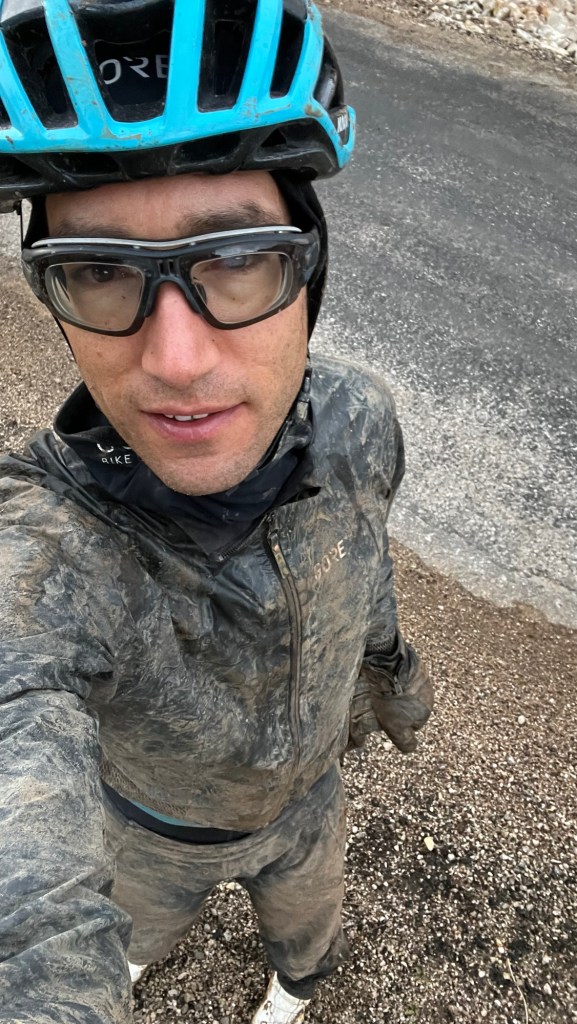
By early evening I arrived at Checkpoint 2 in around sixth place, having caught strong riders including Ulrich Bartholmoes. I ate quickly, filled my bottles, set an alarm for about three and a half hours, slept hard, and left still fully motivated.
Two riders had passed me again while sleeping (Ulrich and Samuele Tonello), so I lost a little ground at the checkpoint. But I felt so good that I caught and passed them again relatively soon. At that point I genuinely believed a top-five finish — maybe even a podium — was possible.
Into the storm
Then came the section that ultimately ended the race.
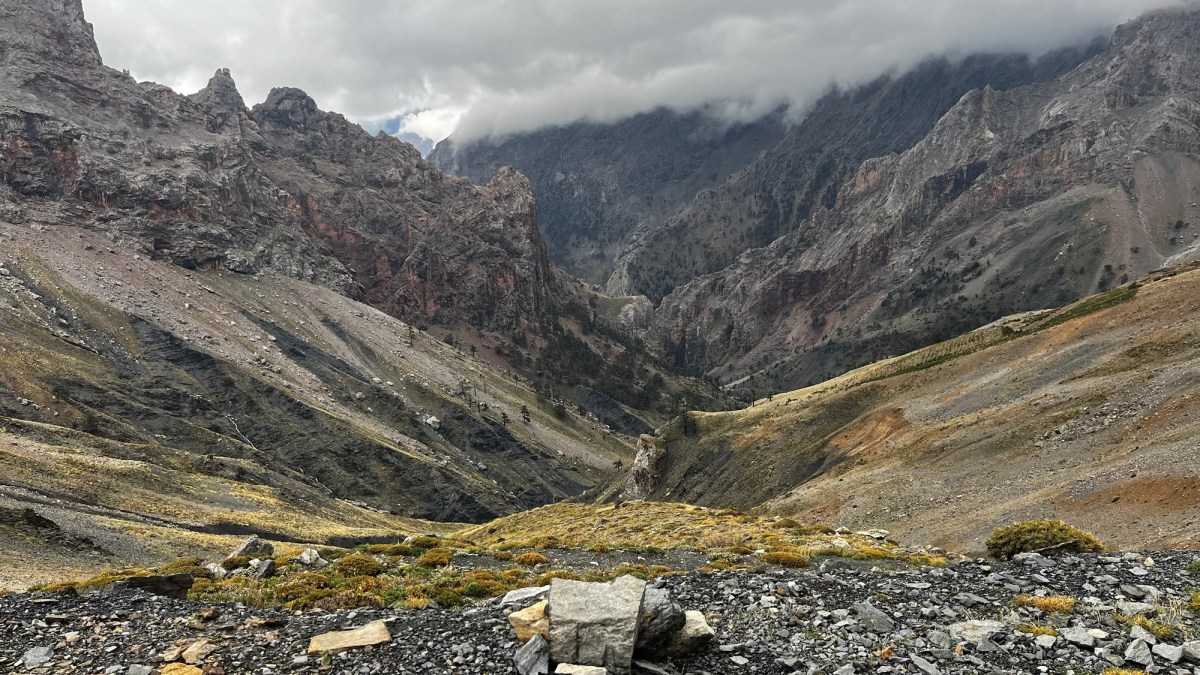
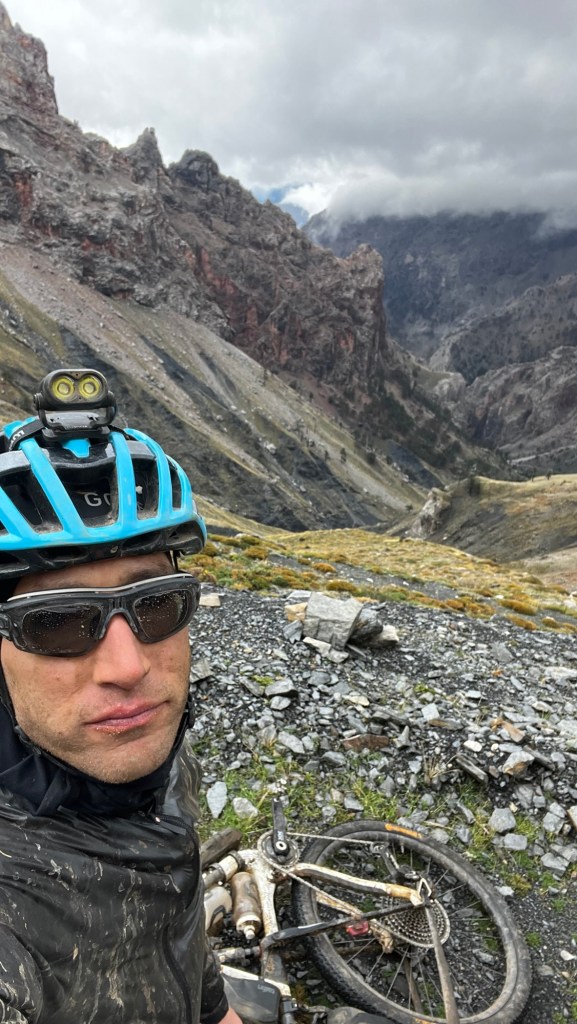
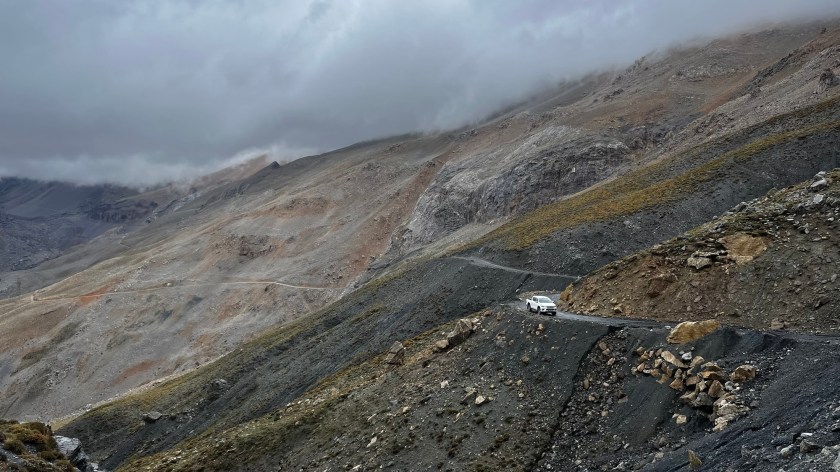
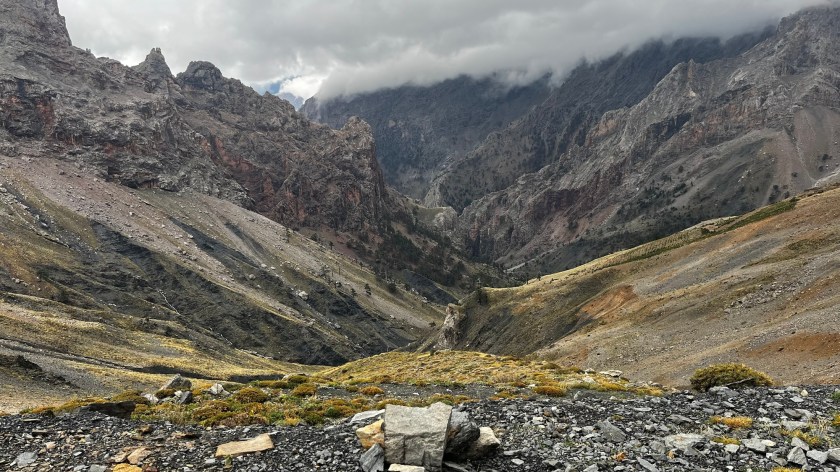
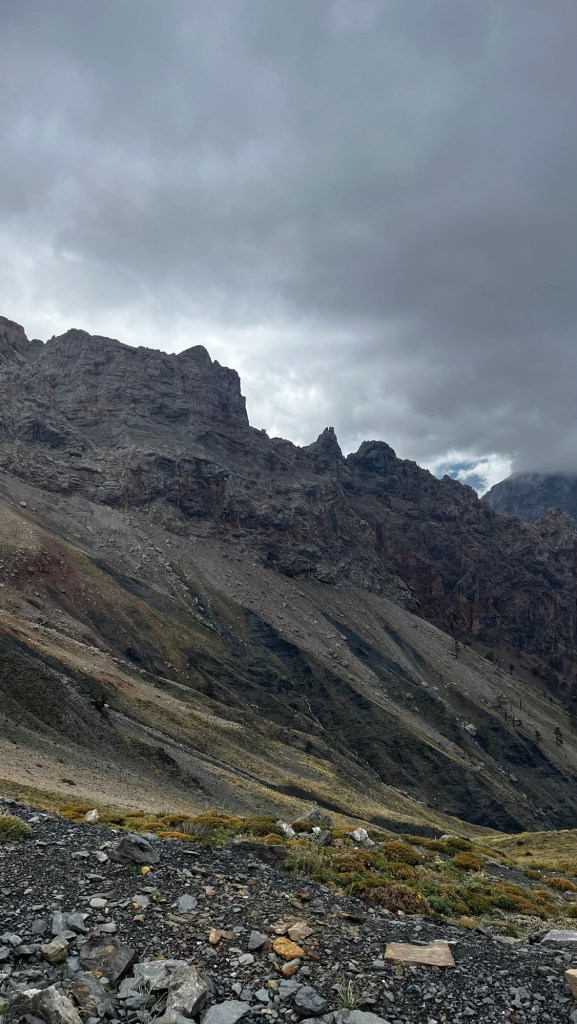
It was a long, remote stretch at roughly 2,500 to 2,900 meters altitude, with constant climbing and descending and far more elevation than I had expected. I entered it just as it was getting light, so at least I could see what was coming.
The conditions were extreme: violent winds, hail, sleet, heavy rain, and storm gusts. The temperature was only just above freezing, and the wind chill combined with the wet was savage. At times I could barely push my bike forward.
I found an abandoned stone shelter with a roof and got inside quickly. There I added every layer I had: down pants, a thick down jacket, my insulated Albion jacket, then rain pants and rain jacket on top, plus heavy winter gloves. That down clothing underneath the waterproofs may well have saved my life.
For the next stretch there was no shelter for at least 40 kilometers. My only strategy was simple: keep eating, keep moving, never stop. I knew that if I paused for long, hypothermia would become a serious risk. Some parts were swamp-like, with water around 30 centimeters deep — sometimes rideable, sometimes only pushable.
My down layers eventually started to get damp through the rain gear, but I never reached the point of uncontrollable shivering. As long as I could still move forward, I felt I had a chance. I descended extremely cautiously because a crash, an injury, or even a longer stop in those conditions could have become dangerous very quickly.
The right decision
When I finally cleared the worst of the high section, I met Nelson and his father Chris. They told me the race had been cancelled.
My first feeling was frustration. I had fought through the storm, was riding in around sixth place, and better conditions seemed to be ahead. But I understood immediately why the decision was necessary.
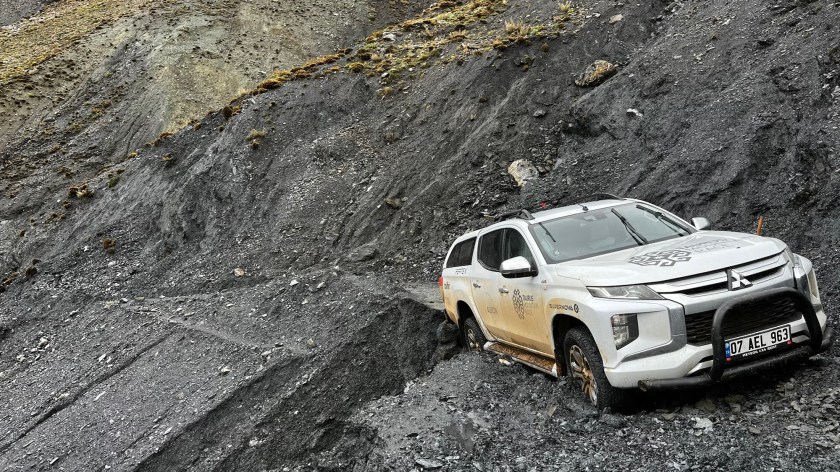
If several riders had got into trouble simultaneously up there, the rescue chain could not have responded within minutes. Two control vehicles had already failed, one was stuck in a landslide and nearly slid down the slope, and the area was extremely remote. Riders behind me, including experienced riders like Ulrich Bartholmoes, Emma Bateup and Meaghan Hackinen, had to be rescued; some activated their SOS devices after being trapped for hours in bivies or unable to make progress.
Anyone who experienced that section firsthand supports the cancellation. The risk of a fatal outcome was simply too high. Nelson made the correct call.
Final thoughts
The Taurus Mountain Race has enormous potential. The landscape is spectacular, the route is demanding in the best ultra-racing sense, and the organization clearly cares about rider safety. If future editions run maybe a month earlier and avoid the worst of the autumn weather, I would absolutely recommend it.
For me, this inaugural edition ended in frustration — but also with deep respect for the mountains, the organizers, and everyone who had to be rescued. Peanut-butter mud, storms at 3,000 meters, and a race stopped for good reason: it was not the finish I wanted, but it was an unforgettable lesson in why ultra cycling demands humility as much as fitness.
Epilogue
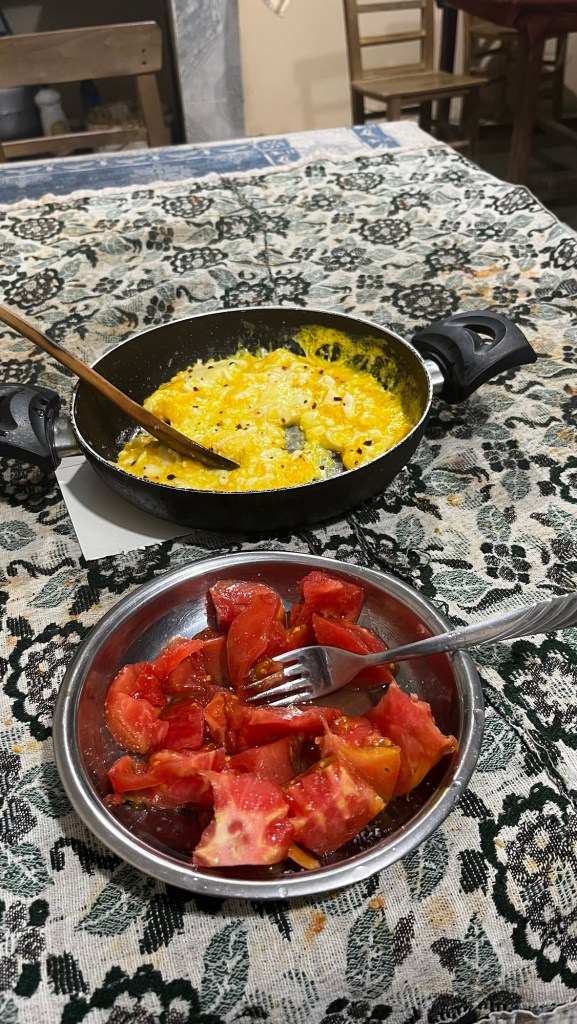
Once I knew the race had been cancelled, I still had to ride roughly 40 kilometers to the next small town. When I arrived, I finally got some proper food: tea, an omelet, and a few sliced tomatoes.
After a few half-hearted and unsuccessful attempts to organize a taxi to the finish, I decided to ride another 60 kilometers that evening to Tarsus, the next larger town, and find a hotel.
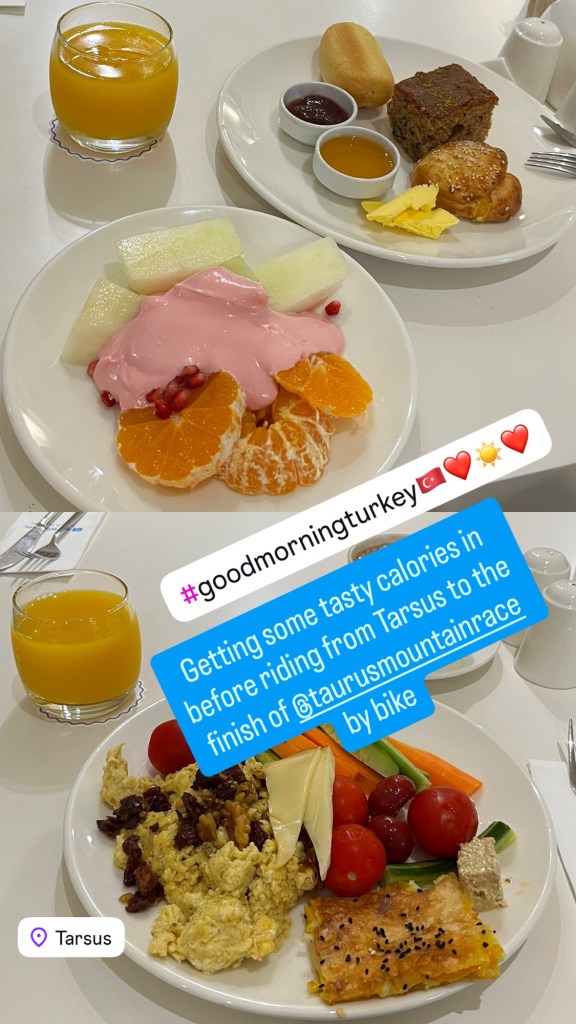
After a restorative night in a 3-star hotel, a very generous breakfast, and finally good weather again, I even decided to ride the remaining 90 kilometers along the coast to the finish. Since then, the community phase has been running at full speed: eat, sleep, rest, repeat. 😉